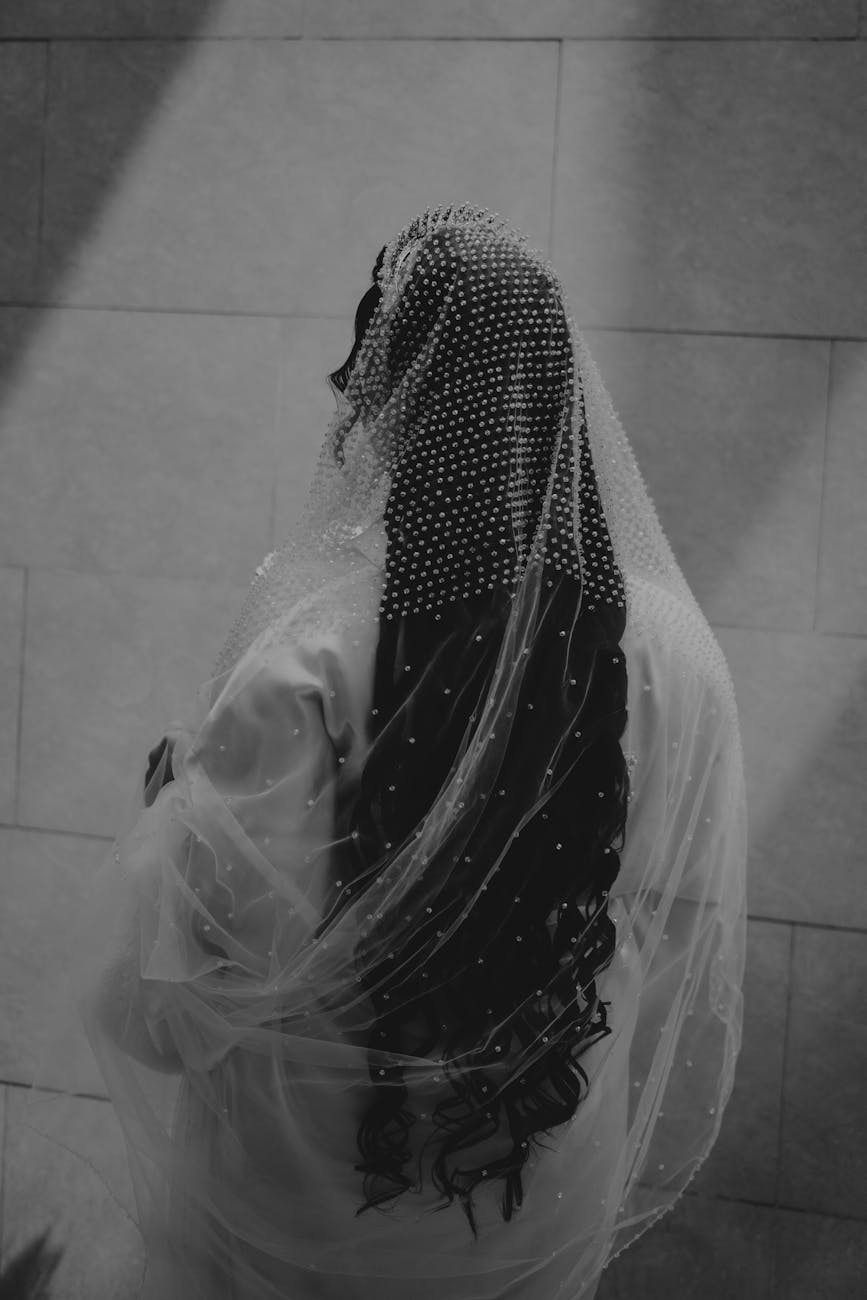
Firstly, what is a veil? In simple terms, a veil is a head covering used for spiritual purposes. Veiling is the act of wearing this head covering.
Veiling often has meanings that are more complex than we realize. Many assume a veil represents rules or restrictions. However, by taking time to ask questions and listen, we often discover richer and more rewarding answers than our initial assumptions. I’ve learned that veiling is more about intention than hiding.
In many spiritual traditions, veils appear wherever something holy is present. Sacred objects are covered. Altars are concealed. Even moments of prayer are sometimes described as being “veiled” from the ordinary world. When a person chooses to veil, it can feel like carrying that same sense of sacredness within themselves. The veil becomes a reminder—both to the wearer and to others—that there is something deeper at work beneath the surface of everyday life.
People who wear a veil often express a sense of peace while doing so. Covering their heads can create a grounding effect, similar to entering a quieter space. Just as specific clothes or rituals indicate prayer or meditation, veiling can help calm the mind and encourage reflection. It acts as a reminder to stay present and intentional. Thus, veiling functions like other spiritual practices by aligning the outer appearance with the inner feelings.
Spiritually speaking, boundaries are important. Veiling is seen as a way to protect—not from the world, but from being overly open to it. It enables the wearer to choose what to share and what to keep private. Instead of a wall, the veil serves as a boundary that respects personal dignity and spiritual focus. This idea is crucial because it highlights choice and personal agency, rather than control.
For many, wearing a veil is closely linked to their identity. It can help them feel connected to their ancestors, community, or spiritual traditions. A veil can feel like being part of something bigger—an ongoing practice shared over generations. This sense of connection can be comforting, especially in a world that often seems distant from its origins.
One challenge in discussions about veiling is the quick judgments made from the outside. Often, veiling is talked about without considering those who actually practice it. Its meaning isn’t constant; it varies based on personal intention, context, and experience. What seems limiting to one person might be very significant to another. To understand veiling, we need curiosity, humility, and an openness to complexity.
People veil for many reasons, but a common thread is the wish to connect with the sacred purposefully. Whether seen as a sign of humility, devotion, protection, or identity, veiling has lasting meaning because it reflects a universal human desire to honor what is sacred, both within ourselves and beyond.
 mossveil
Leave a comment